NALA

Network AI Log-based Analyzer for Anomaly Detection

AI/ML-Driven Open-Source Framework for Network Anomaly Detection

An accessible, modular alternative to traditional SIEMs that combines Zeek and Suricata for deep traffic visibility, AI/ML (Fine-Tuning + RAG) with MCP-controlled analysis for anomaly detection, and OPNsense API for automated, real-time enforcement.
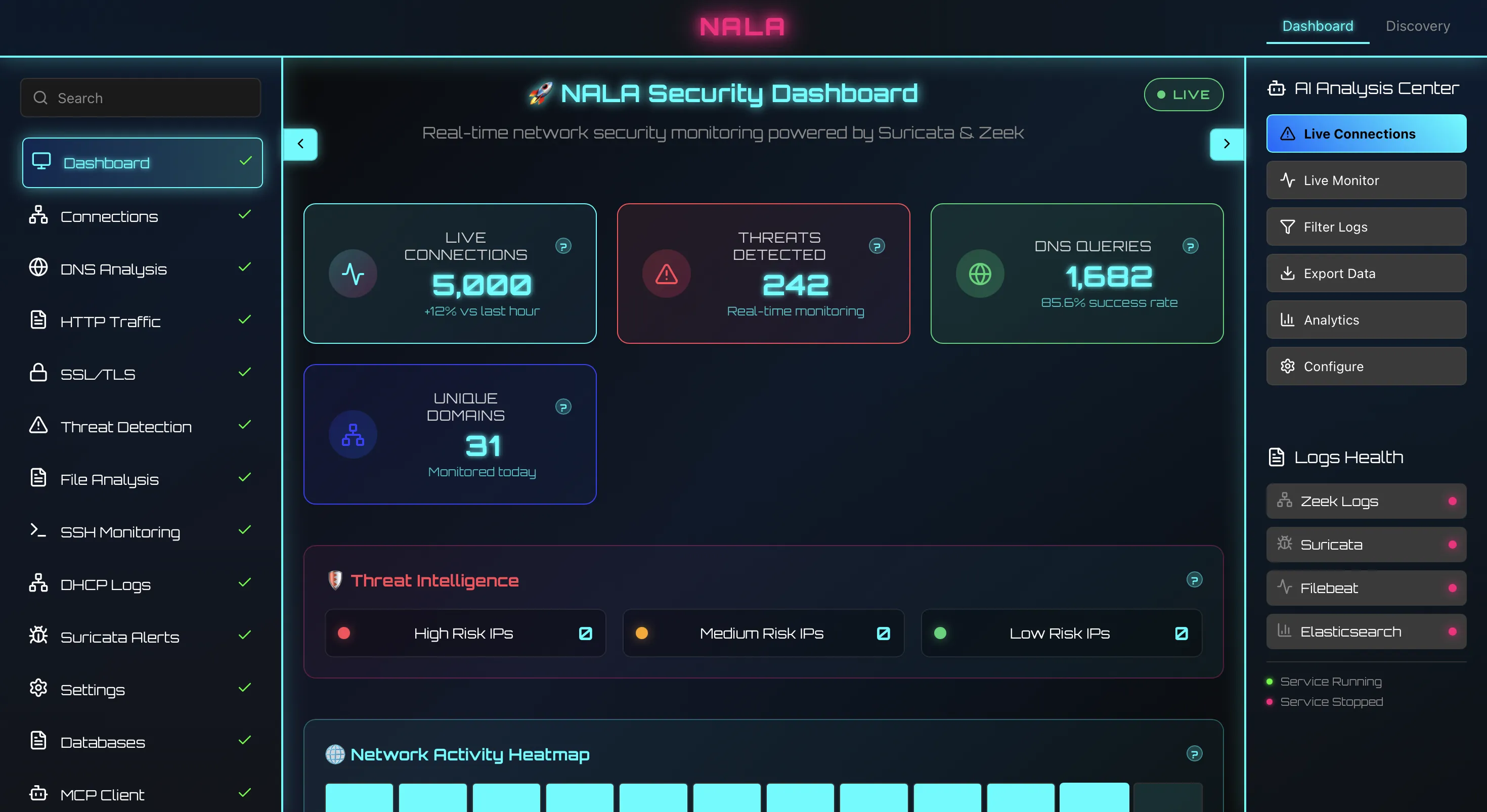
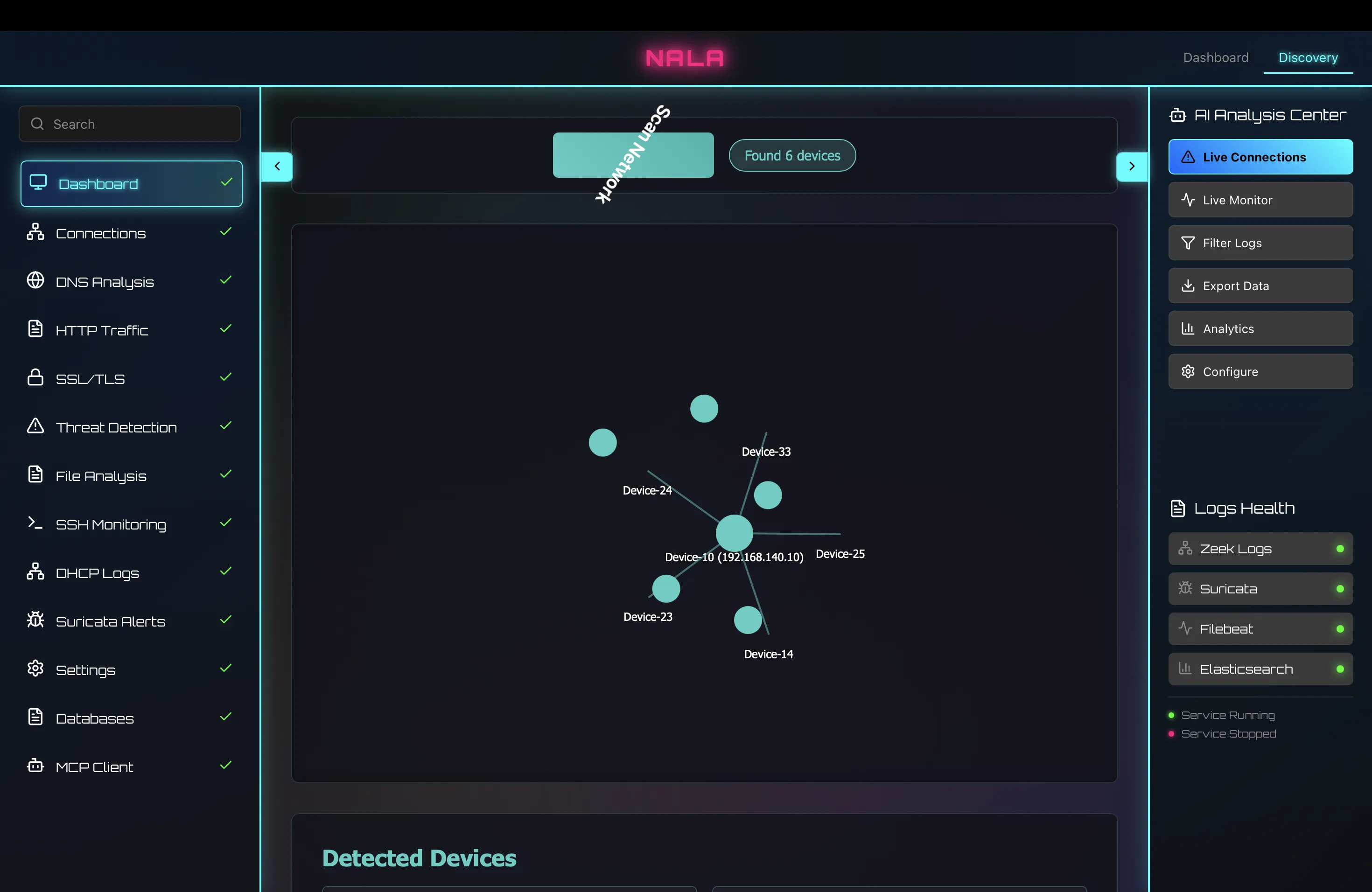
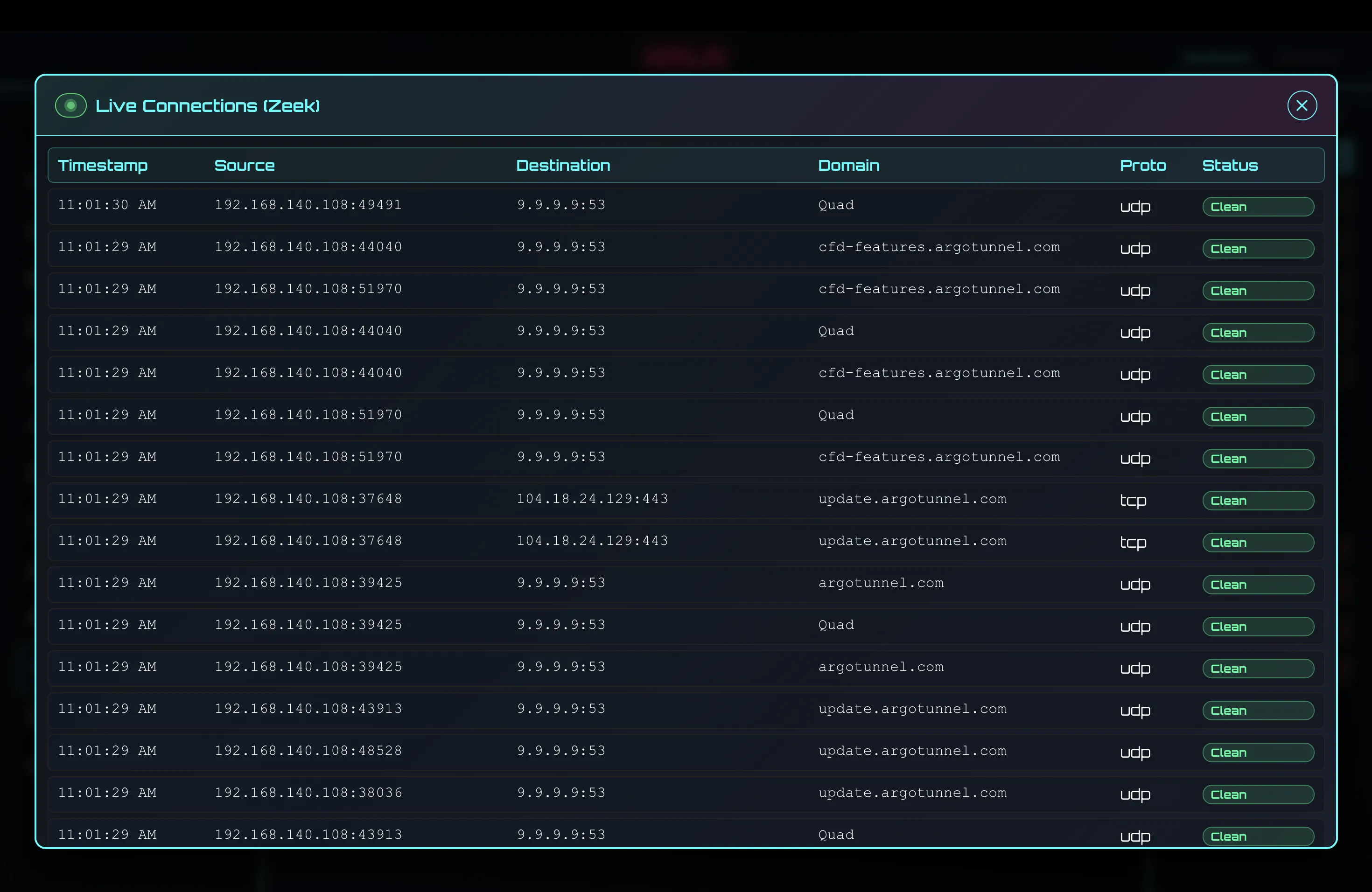


Dashboard Interface Preview

Real-time monitoring with alerts, MCP controls, and intuitive investigation views

Network Dashboard

Network discovery and visualization

Firewall Dashboard

Deep traffic visibility from Zeek with behavioral profiling

How It Works

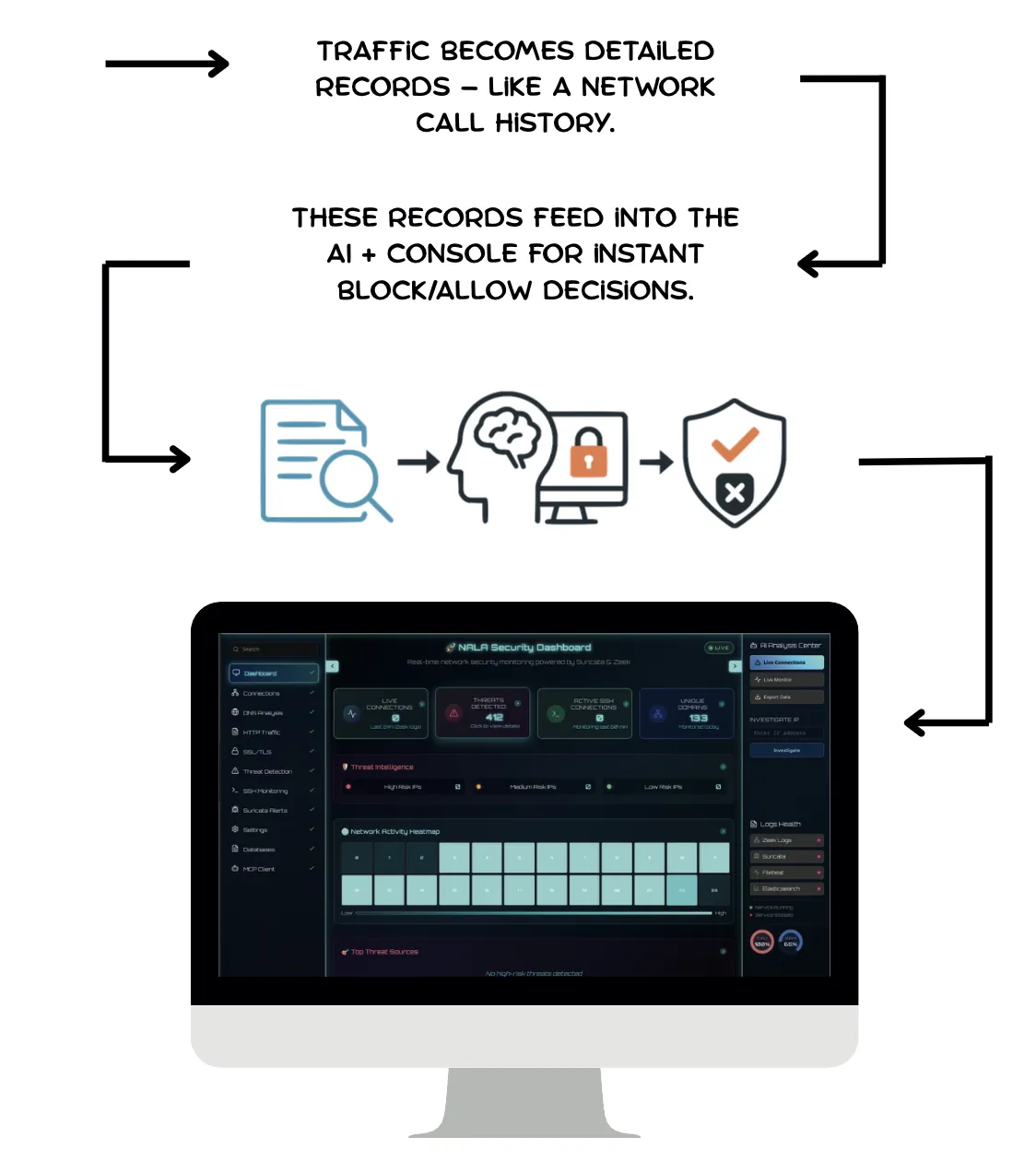
Here’s how it works: an OPNsense edge firewall sits at your network’s front door, seeing every connection and letting us spot and block unwanted activity in real time.

NALA passively mirrors that traffic from OPNsense—no interruptions—turning it into real‑time alerts and insights (with one‑click blocks).

How NALA Works - Traffic becomes detailed records, feeds into AI + Console for instant block/allow decisions

TECHNOLOGY STACK

🛡️
OPNsense
Gateway Layer
Firewall Policies
API Integration
Real-time Enforcement
AI/ML
Model Control Protocol (MCP)
Fine-Tuning
Retrieval-Augmented Generation (RAG)
Anomaly Detection Models
Behavioral Profiling
LOGGING
Zeek Network Analysis
Suricata IDS/IPS
Elasticsearch/OpenSearch Indexing
Threat Feeds (AbuseIP)
🖥️
INTERFACE
Electron Desktop App
Visualization Dashboards
Investigation Workflows
Real-time Decision Making

Frequently asked questions

It is a modular, low-cost alternative focused on real-time anomaly detection using Zeek/Suricata and AI/ML (Fine-Tuning + RAG). It reduces licensing and operational complexity while remaining scalable and suitable for research and educational environments.
OPNsense for gateway enforcement, Zeek for protocol metadata, Suricata for IDS/IPS alerts, Elasticsearch/OpenSearch for indexing and visualization, and an MCP-controlled analysis layer with Electron desktop UI for investigation and response.
Logs are enriched and features extracted for anomaly detection models built with scikit-learn, PyTorch, and PyOD. Fine-tuned models capture attack patterns, while RAG provides contextual anomaly detection and explanation. MCP enables operator control for rapid rule deployment without waiting for long retraining cycles.
The OPNsense API applies dynamic firewall actions (allow, block, quarantine) in real time, orchestrated from the NALA App based on model/MCP decisions.
Dashboards for anomaly correlation and triage, behavioral profiling to detect deviations such as botnets, exfiltration, and APTs, with real-time Elasticsearch queries managed under MCP control.
Runs on Debian-based Linux, suitable for mini-PCs, RPi 4/5, VMs, or cloud. Network traffic can be mirrored to a sensor for collection.
Future plans include continued evaluation of Fine-Tuning vs RAG vs MCP strategies, integration of additional threat intelligence feeds, scaling performance to enterprise environments, and improved operator tooling through MCP. Open-source contributions and community feedback are encouraged.

Get in Touch

Have questions or want to collaborate?
Reach out through the following channels:

Open Live Demo
Note: Works in Safari. Other browsers require HTTP (no SSL) due to WebSocket policy.